Where the game begins
A new game of VEL now opens where its story does: on the bank of Reed Lake at dusk, with nothing in Aru’s hands. The lake’s ten rooms are built and dressed, and so is the Sisters’ Camp above it, so the game’s first half hour is no longer boxes.
Reed Lake
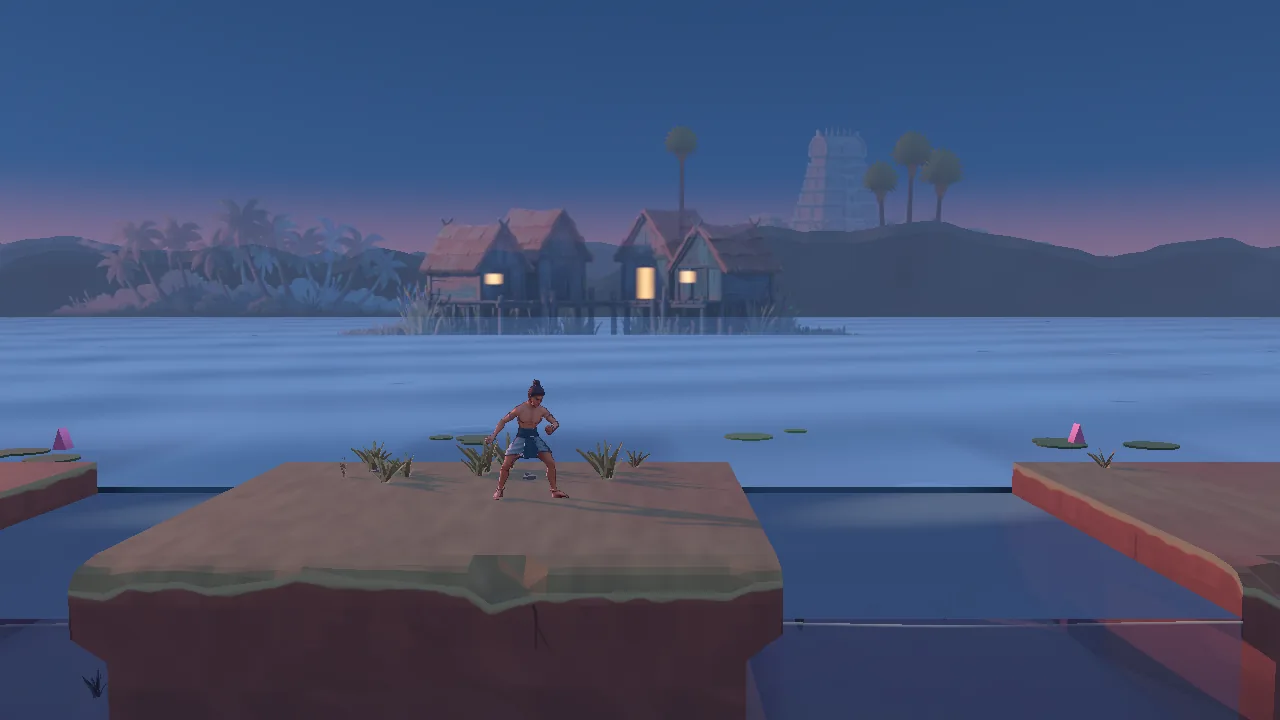
Reed Lake is Aru’s home, the wet fields of old Tamil poetry: reeds and lotus, paddies on the banks, and a village on stilts over the water. The Tide-King’s raiders have come up the river, and Aru has nothing to fight them with. He runs the reed beds and the paddies, the game’s first runs and jumps, climbs between the stilt houses and flees over their roofs to the leaning house at the end. From its ridge he dives into the lake’s dark middle, where something in the mud glows like a coal: the spear the salt has woken. He pulls it out.
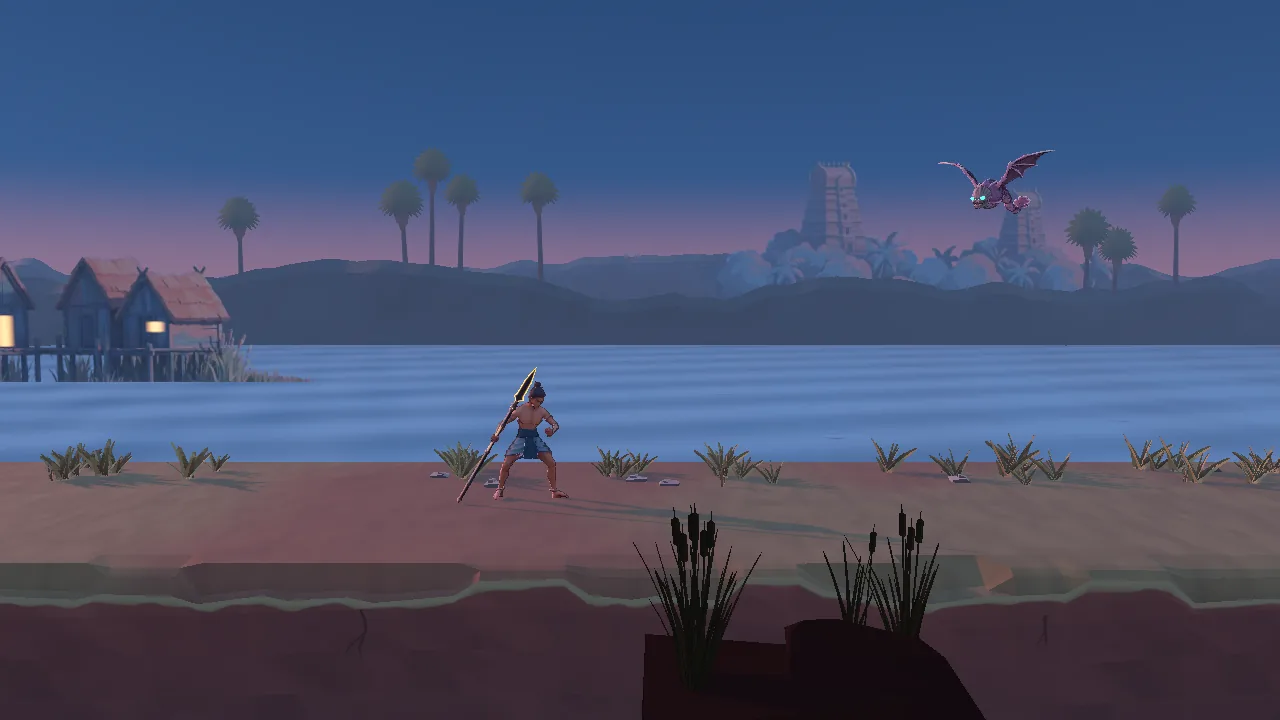
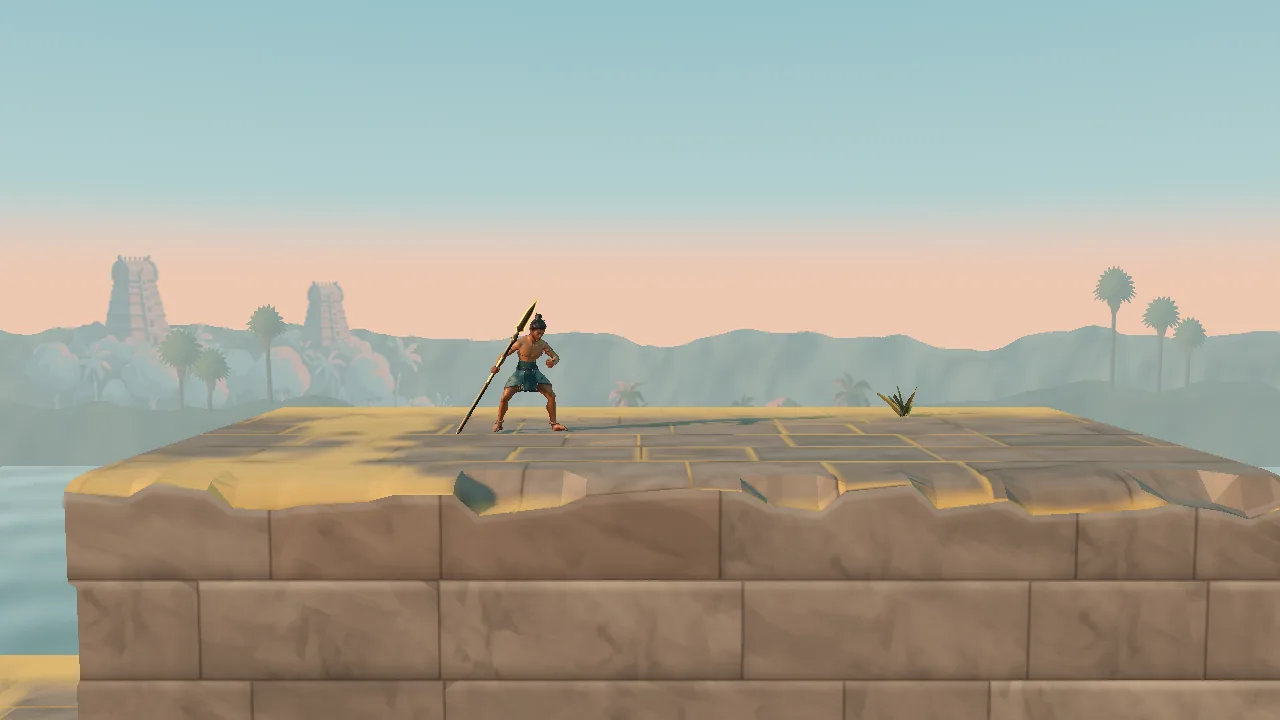
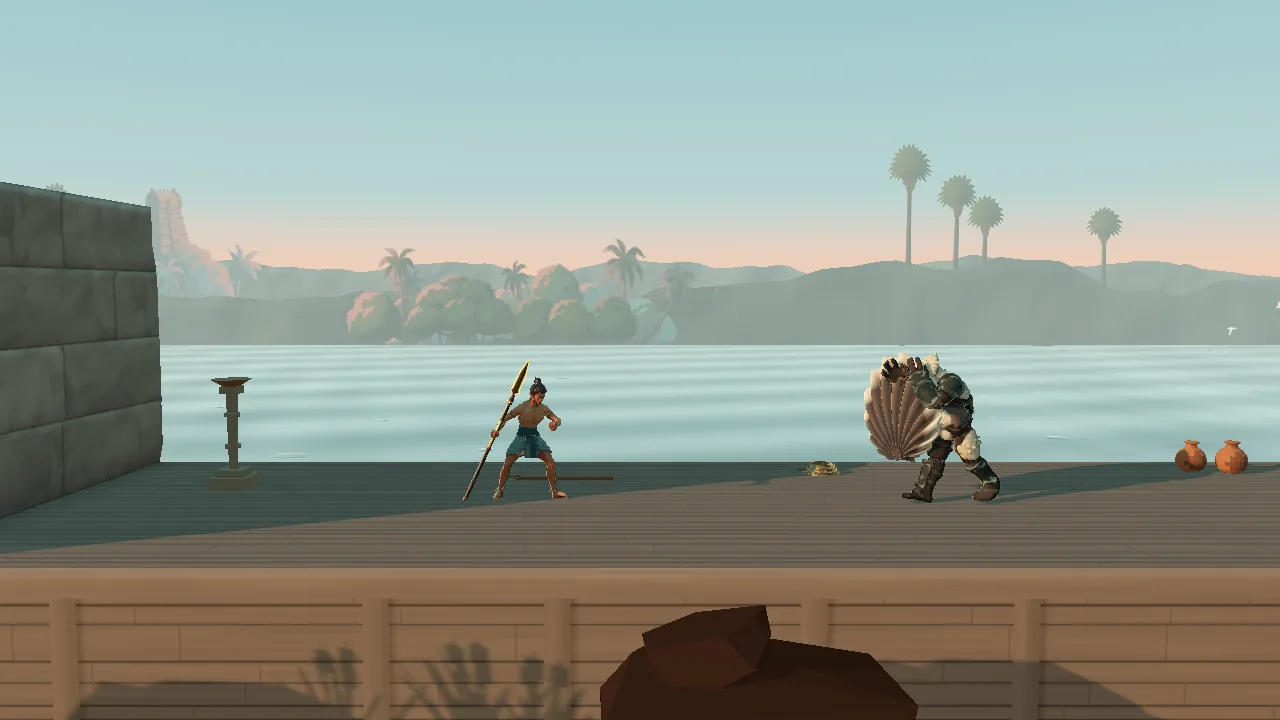
From there the lake teaches the spear one use at a time: a throw into a wing-demon over the shallows and the recall back through it, then a flock of them, then the step: the spear thrown into the sunken boathouse’s wall, stood on and jumped from, and up the old tank’s tiers the same way as dawn breaks over the water. A raider holds the jetty with his shell, and the last of the raid waits on the rise up into the forest.
The raid happens at dusk. The sun is just down behind the lake, the far shore’s palms and temple towers stand dark against a rose band of sky, lamplight shows in the village’s doorway and shutters, and egrets cross low over the water. Dawn comes up while Aru climbs the old tank: the water turns from blue-violet to a calm teal and the sky over the far shore to peach. Underfoot are the lake’s own things: banks of red-brown mud with grass along their lips, the village’s weathered timber, the tank’s warm grey granite, and reeds and cattails along the shore in front.
The Sisters’ Camp
Up from the lake, a path climbs through the dripping forest to the camp under the great banyan, where six smiths keep the spear’s sparks. It is evening there, in the rains, as the old poems have the forest: dark wet stone with water standing in its hollows, the banyan’s bark, the sisters’ shelters of old boards and canvas, and the forest stepping back into the rain’s blue-grey haze. Their stations stand in a clearing and round Uruthi’s forge, by the camp’s great lamp, and three of their trials climb the banyan’s branches over the camp. The camp road leads out of the trees through a cut in the rock, past a rockfall, up into the Lion Gate’s noon.
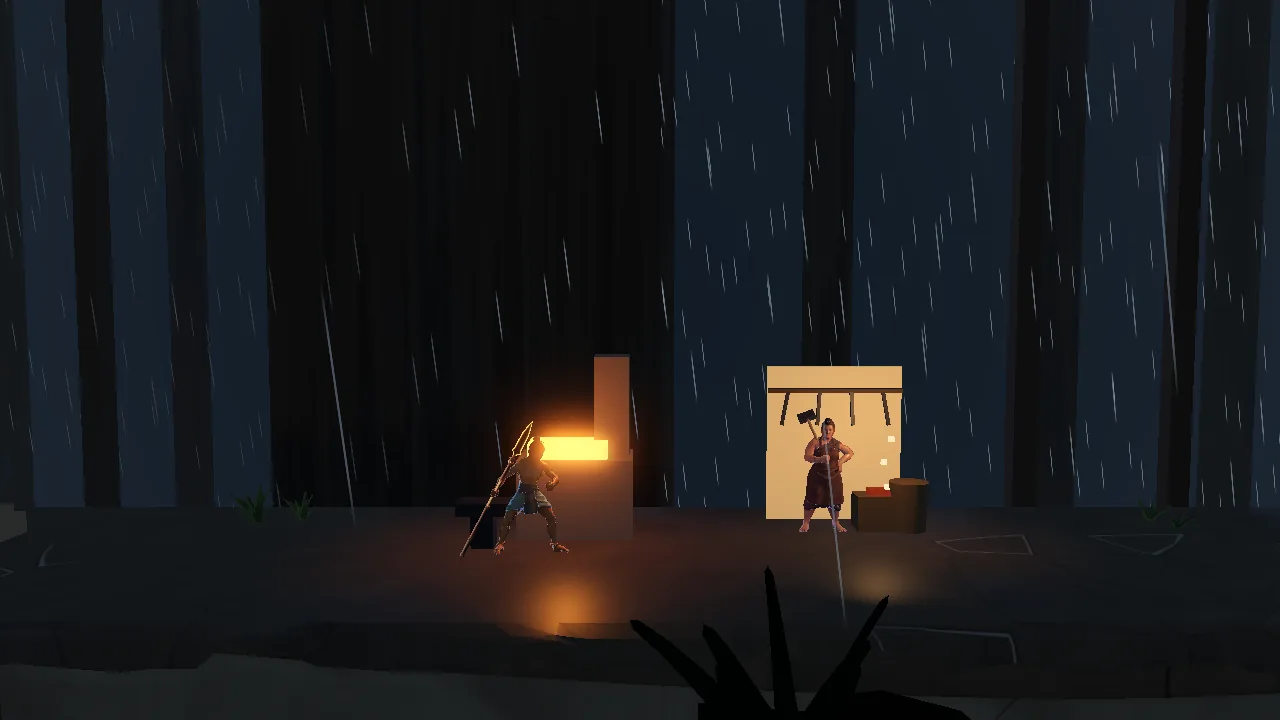
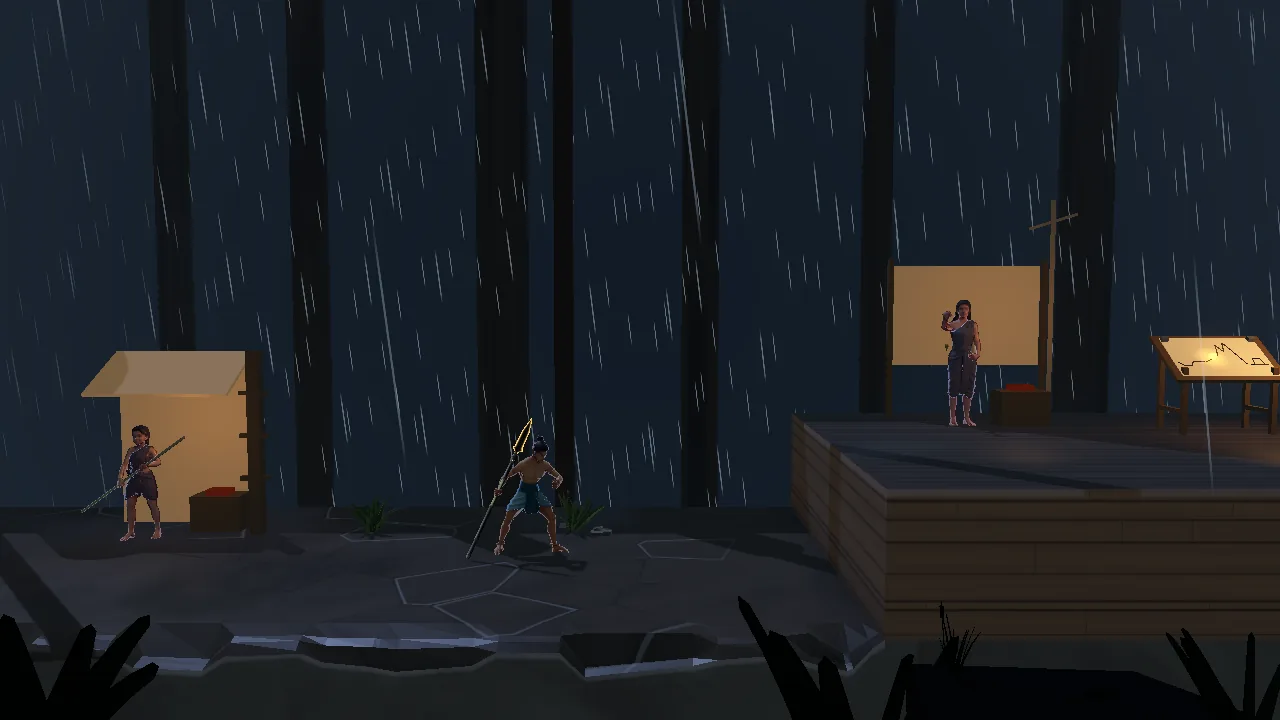
Both will be dressed further, a pass at a time, as the Lion Gate has been.