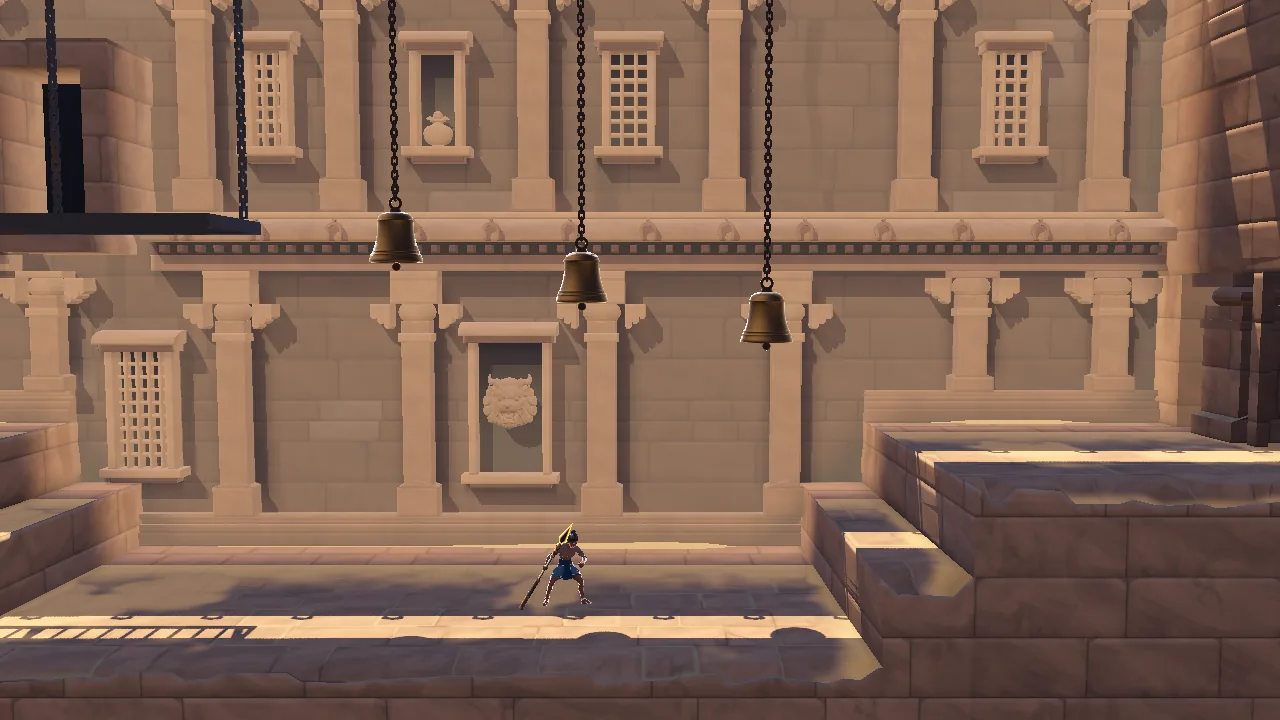
From boxes to a salt gorge
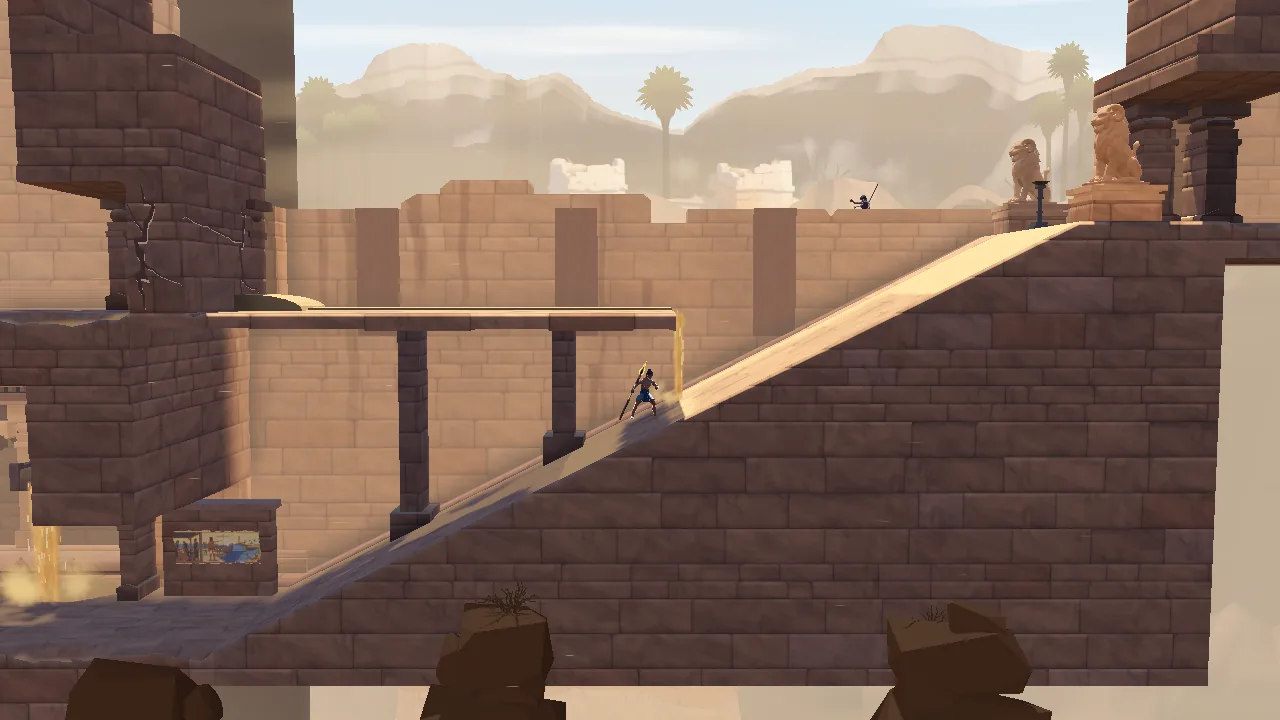
The Lion Gate is the first region on Aru’s road: a fortress across a dry gorge, built long ago to guard the river road and taken by the Tide-King’s general. It has thirty-four rooms, and a first run through them takes a little over an hour.
Boxes first
Every one of those rooms was played as plain boxes before it got any art.
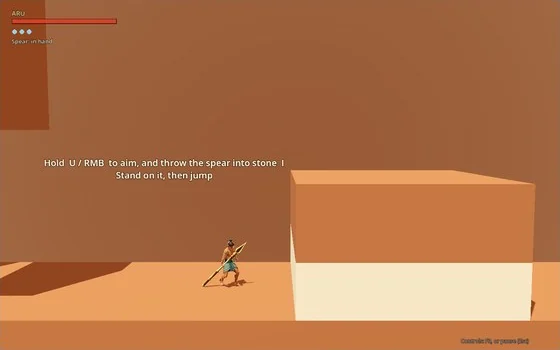
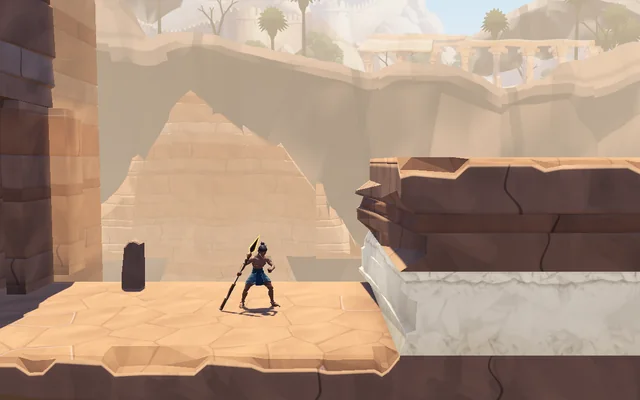
A room of boxes tells you whether a jump is fair, whether a fight is too crowded and whether the way on is clear. It’s cheap to change, so we change it a lot. Bots play every room’s routes each time the game changes, so a jump that stops working shows up the same day.
Ancient, not perfect
When a room works, it gets dressed, a pass at a time: worn sandstone, lit ledges, lion heads carved over the doors, sand drifted into the corners and thorn scrub on the wall tops. The rule for all of it is that the Lion Gate was built well a long time ago and has been dying since the river failed. It should look finished as art, but never new as stone.
The other rule is that wear never touches what you play. Ledge lips stay crisp and lit, tops stay flat, no crack looks like a handhold and no rubble looks like a foothold.
The dry land
Old Tamil poetry divides the land into five landscapes, each with its own hour, season, plants and birds. The Lion Gate is paalai, the dry land. In the poems it is high summer at noon: glare, red earth, thorn and the kites over an empty road. Paalai is what the other lands become when the sun burns them.
Then there is the salt. The Tide-King’s salt crusts the stone along the old waterline, and the spear glances off it. Salt is never decoration in VEL. Where you see it, it matters.
Where it stands
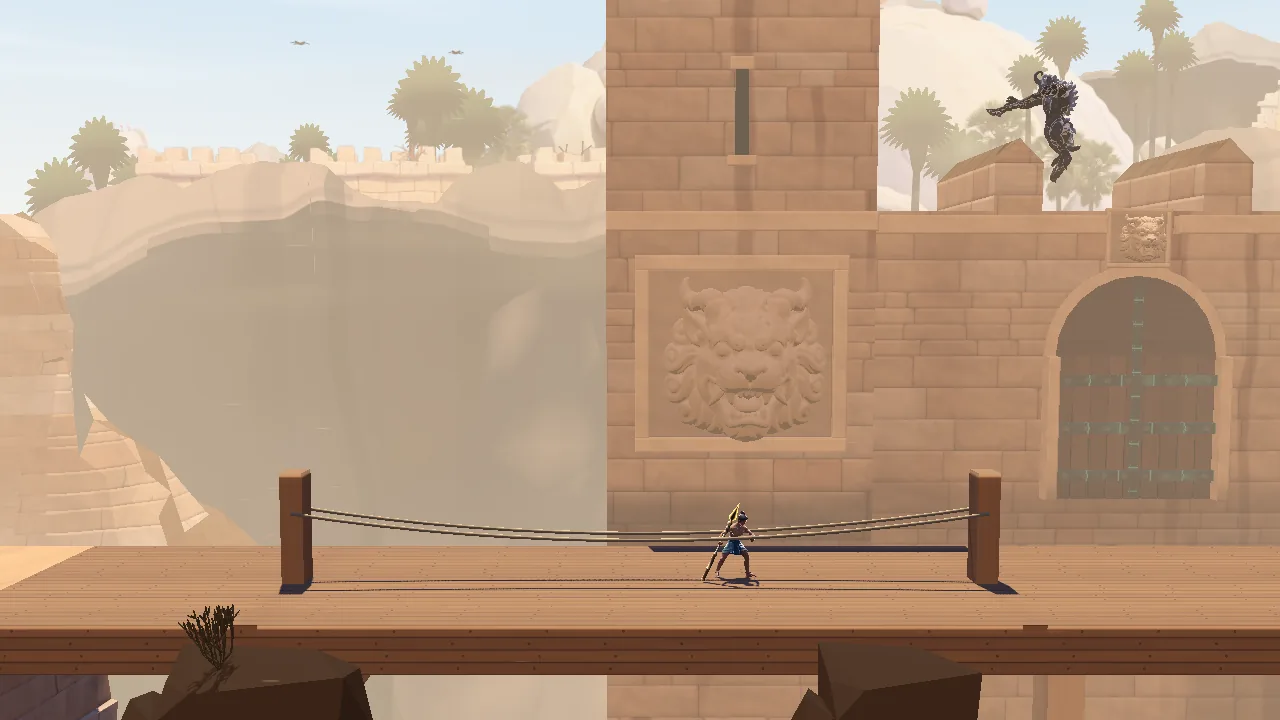
The Lion Gate plays from start to finish, the General included, and the dressing passes go on. Next on the road is Heron Mountain, a mountain of illusions at midnight, which plays in greybox up to its king.